


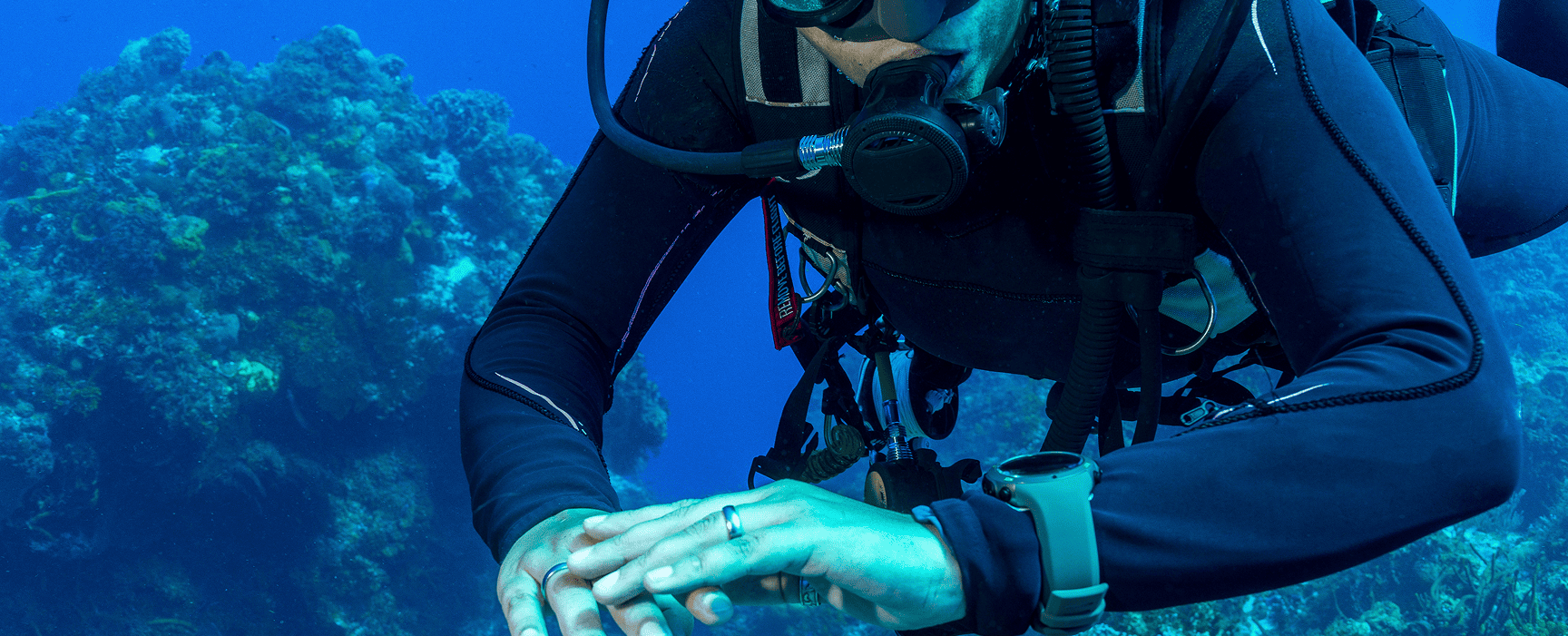
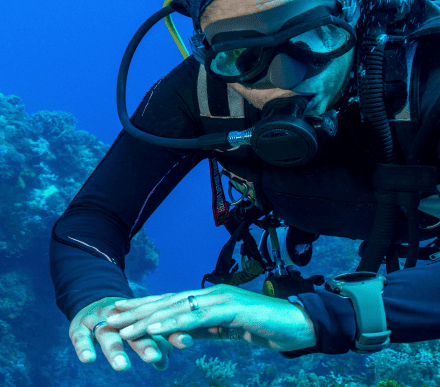
Expert Guidance from Scuba Schools of America: Training Divers Since 1959
For modern divers, the real question is not "Should I use a dive computer?" It is "Which type of dive computer is right for me?"
At Scuba Schools of America (SSA), we use and sell both:

Watch-style dive computers like the Shearwater Teric and Garmin Descent™ Mk3

Larger technical / wrist-mounted computers like the Shearwater Petrel 3 Fischer and Ratio iX3M2 Pro Dive Computer and the MARES Genius
First Things First:
Why You Need A Dive Computer At All
Whether it looks like a sleek wristwatch or a larger “tech brick,” a dive computer is now essential safety gear. It constantly tracks:
- Depth and bottom time
- No-decompression limits
- Navigation concerns
- Ascent rate
- Gas consumption
- Nitrogen loading
- Oxygen exposure
- Safety stops
- Multi-level dive profiles & Tissue loading
- Gradient factors
Two Main Styles: Watch-Style vs Larger Technical Dive Computers
Watch-Style Dive Computers
Examples we sell: Shearwater Teric, Garmin Descent™ Mk3, Ratio iDive, Mares Puck and more
These units are designed to look and feel like a premium sports watch while functioning as a full-featured dive computer.
Key Advantages
Everyday wearability: You can wear a Teric or Descent Mk3 as your daily watch, then go straight into the water.
Compact form factor: Lower profile on the wrist and easier to travel with.
Smart features (model-dependent): Options like GPS, smart notifications, fitness tracking, and multi-sport modes.
Multi-activity use: Great if you snorkel, freedive, and scuba dive, or want a single device for land and water.
Plenty of power for most recreational and many advanced divers: Multi-gas, nitrox, freedive modes, and more, depending on the model.
Best For
Recreational and advanced divers who want one device for daily wear and diving
Divers who value style, convenience, and versatility
Travelers and liveaboard divers who like a compact setup
Divers with great eyesight for smaller numbers close up
-
Centauri Watch Computer
Regular price $330.00Regular priceUnit price perSale price $330.00 -
Graviton Color Watch Computer
Regular price $600.00Regular priceUnit price perSale price $600.00 -
iDive Color Tech+
Regular price $668.00Regular priceUnit price perSale price $668.00 -
iDive Color Deep
Regular price $578.00Regular priceUnit price perSale price $578.00 -
iDive Color Easy
Regular price $466.00Regular priceUnit price perSale price $466.00


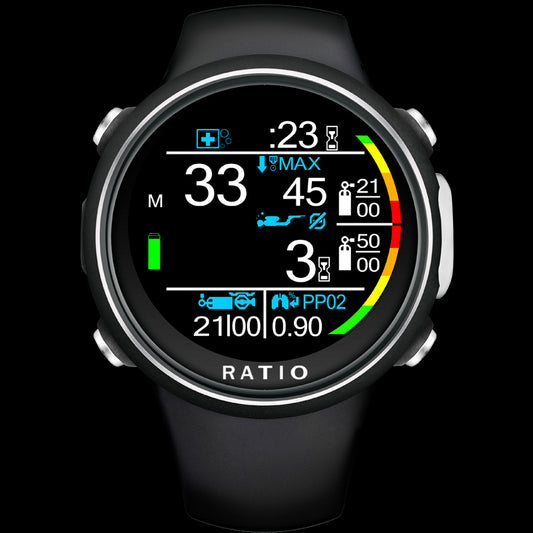
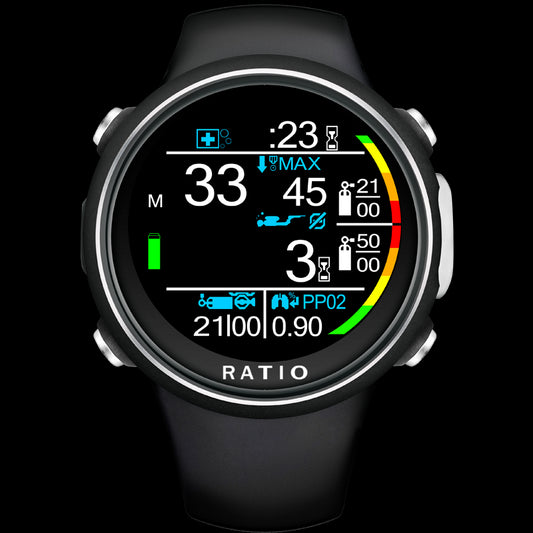
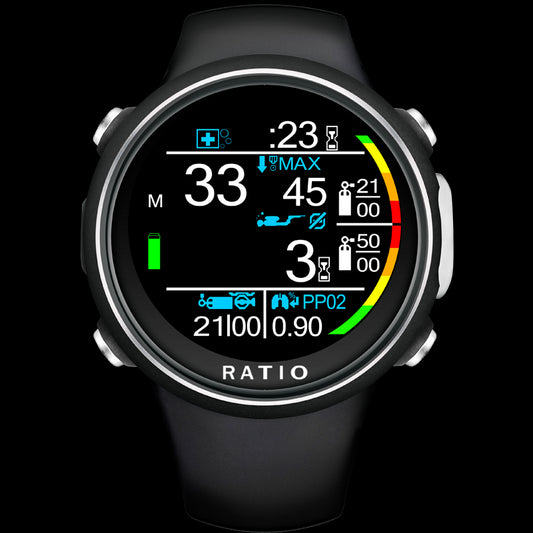


Larger Technical / Wrist-Mounted Dive Computers
Examples we sell: Shearwater Petrel 3 Fischer, Ratio iX3M2 Pro Dive Computer, and Mares Genius
These are purpose-built instruments with bigger screens, bigger data fields, and often more advanced configuration options.
Key Advantages
Large, highly readable display: Bigger fonts and clearer layouts for depth, NDL, PPO2, deco info, readable maps, GPS capabilities and more.
Serious technical capabilities: Ideal for tech divers using multiple gases, decompression, or rebreathers (for example, Petrel 3 Fischer as a controller/monitor in CCR setups).
More “instrument-like” feel: Designed first and foremost as a professional-level dive tool, not an everyday watch.
Advanced customization: More options for screen layouts, algorithm tuning, gases, CCR integration, and alarms.
Best For
Divers planning to move into extended range, possible decompression training, sidemount, or rebreather diving
Divers who want maximum screen visibility and data clarity
Those who prefer a dedicated dive instrument rather than a daily-wear watch


Additional Information
Shared Benefits: What Both Styles Have In Common
Whether you choose a watch-style computer or a larger technical computer, the units we carry at Scuba School of America offer:
Real-time decompression and NDL calculations
Ascent rate monitoring and safety alerts
Multiple dive modes (recreational, nitrox, often trimix or CCR on higher-end models)
Logbook and profile storage
User-friendly navigation once you are trained
In other words, either style is a massive safety upgrade compared to diving with a basic mechanical watch.
How Your Diving Goals Influence The Right Choice
Choose a Watch-Style Computer If You:
- Want one device that works as a daily watch and a serious dive tool
- Mostly do recreational and advanced diver profiles
- Appreciate smartwatch-style features such as notifications or activity tracking
- Value a sleeker, lower-profile design on your wrist
- Travel frequently and want a compact, all-in-one solution
Choose a Larger Technical Computer If You:
- Plan to move into technical or CCR diving
- Want the largest, clearest display possible
- Prefer a dedicated instrument just for diving
- Need advanced multi-gas, trimix, or rebreather features
- Like having extra space for more data fields on screen at once
Comparing Comfort, Readability, And Ease Of Use
Comfort & Wearability
Watch-style computers are more comfortable for everyday wear, lighter, and sit flatter on the wrist.
Larger computers can feel bulkier on land, but many divers love the solid, purpose-built feel underwater.
Readability Underwater
Larger computers generally win here. Bigger screens and fonts make it easier to read critical info at a glance, in low visibility or at night.
Watch-style computers are still highly readable, but if your eyes are not what they used to be, or you are doing complex dives, you may appreciate the extra real estate.
Menus And Learning Curve
All four models we stock in this category are designed for divers, not just gadget fans. At SSA, we teach you how to:
- Set up your gas mixes and alarms
- Interpret warnings and decompression information
- Review and learn from your dive logs
We do this on the pool deck and in our heated training pool, so by the time you hit open water, your computer feels familiar.
Cost And Long-Term Value
Prices vary by model and features, but think of it this way:
Watch-style dive computers: You are paying for both dive functionality and daily wear versatility. Great value if you use it on land and underwater.
Technical computers: You are investing in maximum performance, visibility, and future potential if you plan to continue into technical diving or CCR.
Either way, all the computers we sell are quality instruments from trusted brands, which helps protect your investment over time.
What Our Dive Experts Recommend For Most Divers
For most recreational and advanced divers, we often recommend starting with a watch-style dive computer such as the Shearwater Teric or Garmin Descent Mk3, especially if you like the idea of wearing your computer every day.
If you know you are headed into technical or rebreather diving, or you simply prefer a bigger, more “instrument-like” display, a Shearwater Petrel 3 Fischer or Ratio iX3M2 Pro can be the smarter long-term choice.
Either way:
- You are using a dive computer, not relying on a simple watch.
- You are getting modern decompression algorithms and safety tools.
- You are choosing a model that SSA instructors know, use, and can support.
Try These Computers In Our Pool Before You Commit
One of the biggest advantages of shopping with Scuba Schools of America is that you are not choosing blind.
In our on-site heated training pool, you can:
- Test how each unit feels and reads in real diving conditions
- Try different screen layouts and menus
- Ask our instructors which model best fits your training path
- Learn how to set up your gases, alarms, and logbook features
This hands-on approach helps you choose gear that matches your current level and future goals, not just what looks good in a product photo.
Ready To Choose Your Next Dive Computer?
Shop All Dive Computers



With promotional financing from SCUBA SCHOOLS OF AMERICA & SWIM, major purchases don't have to wait. Get what you want now and pay over time.


